
banner
#DuinoElegies Duino Elegies
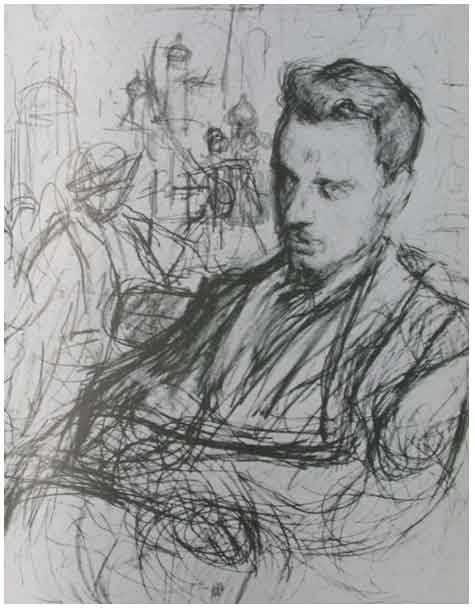
The Duino Elegies () are a collection of ten elegies written by the Bohemian-Austrian poet Rainer Maria Rilke (1875–1926). Rilke, who is "widely recognized as one of the most lyrically intense German-language poets," Biography: Rainer Maria Rilke Read More..
Ratings
Ratings 0
Likes
Likes 0
Reviews
Reviews 0
HASH INFO
Review# tag DuinoElegies
Review# tag
Hash title Duino Elegies
Hash title
Description The Duino Elegies () are a collection of ten elegies written by the Bohemian-Austrian poet Rainer Maria Rilke (1875–1926). Rilke, who is "widely recognized as one of the most lyrically intense German-language poets," Biography: Rainer Maria Rilke 1875–1926 on the Poetry Foundation website. Retrieved 2 February 2013. began writing the elegies in 1912 while a guest of Princess Marie von Thurn und Taxis (1855–1934) at Duino Castle, near Trieste on the Adriatic Sea. The poems, 859 lines long in total,The elegies vary in length. In the Rilke's original German text the First Elegy is 95 lines; Second Elegy, 79 lines; Third Elegy, 85 lines; Fourth Elegy, 85 lines; Fifth Elegy, 108 lines; Sixth Elegy, 45 lines; Seventh Elegy, 93 lines; Eighth Elegy, 75 lines; Ninth Elegy, 80 lines; Tenth Elegy, 114 lines. The several English translations differ in line count. were dedicated to the Princess upon their publication in 1923. During this ten-year period, the elegies languished incomplete for long stretches of time as Rilke suffered frequently from severe depression—some of which was caused by the events of World War I and being conscripted into military service. Aside from brief episodes of writing in 1913 and 1915, Rilke did not return to the work until a few years after the war ended. With a sudden, renewed inspiration—writing in a frantic pace he described as a "boundless storm, a hurricane of the spirit"Rilke to Lou Andreas-Salomé (11 February 1922) in Rilke, Rainer Maria and Andreas-Salomé, Lou. Briefwechsel (Insel, 1952), 464.—he completed the collection in February 1922 while staying at Château de Muzot in Veyras, in Switzerland's Rhone Valley. After their publication in 1923 and Rilke's death in 1926, the Duino Elegies were quickly recognized by critics and scholars as his most important work.Hoeniger, F. David. "Symbolism and Pattern in Rilke's Duino Elegies" in German Life and Letters Volume 3, Issue 4, (July 1950), pages 271–283.Perloff, Marjorie. "Reading Gass Reading Rilke" in Parnassus: Poetry in Review. Volume 25, Number 1/2 (2001).The Duino Elegies are intensely religious, mystical poems that weigh beauty and existential suffering.Gass, William H. Reading Rilke: Reflections on the Problems of Translation. (New York: Alfred A. Knopf, 1999). The poems employ a rich symbolism of angels and salvation but not in keeping with typical Christian interpretations. Rilke begins the first elegy in an invocation of philosophical despair, asking: "Who, if I cried out, would hear me among the hierarchies of angels?" (Wer, wenn ich schriee, hörte mich denn aus der Engel Ordnungen?)Rilke, Rainer Maria. "First Elegy" from Duino Elegies, line 1. and later declares that "every angel is terrifying" (Jeder Engel ist schrecklich).Rilke, Rainer Maria. "First Elegy" from Duino Elegies, line 6; "Second Elegy", line 1. While labelling of these poems as "elegies" would typically imply melancholy and lamentation, many passages are marked by their positive energy and "unrestrained enthusiasm." Together, the Duino Elegies are described as a metamorphosis of Rilke's "ontological torment" and an "impassioned monologue about coming to terms with human existence" discussing themes of "the limitations and insufficiency of the human condition and fractured human consciousness ... man's loneliness, the perfection of the angels, life and death, love and lovers, and the task of the poet."Dash, Bibhudutt. "In the Matrix of the Divine: Approaches to Godhead in Rilke's Duino Elegies and Tennyson's In Memoriam" in Language in India Volume 11 (11 November 2011), 355-371.Rilke's poetry, and the Duino Elegies in particular, influenced many of the poets and writers of the twentieth century. In popular culture, his work is frequently quoted on the subject of love or of angels and referenced in television programs, motion pictures, music and other artistic works, in New Age philosophy and theology, and in self-help books.
Description
Created By Admin
DETAILS
Name Duino Elegies
Name
Authors Rainer Maria Rilke
Authors
Translator
Translator
Genre poems
Genre
Series
Series
Number in series
Number in series
Language German
Language
Country
Country
PUBLISH
Story timeline
Story timeline
Pages
Pages
Media_type
Media_type
Isbn
Isbn
Oclc
Oclc
Publisher Insel-Verlag
Publisher
RELEASE
Pub_date 1923
Pub_date
Release_date
Release_date
Writing
Portraying the concept
Style of narration
Language & literature
Overall rating
No reviews available for #DuinoElegies, Do you know Duino Elegies?, Please add your review and spread the good things.
No images available.
MORE INFO
Ratings
No ratings yet.
Feature Ratings
No Feature ratings yet.
Popularity
Reaches
No data available now.
Ranks
This #hashtag is not ranked yet.
×